
Self love is
born of humility,
reached via
that narrow
avenue between
honor and self
pity.
I glimpse myself
as god sees me:
a feisty toddler,
a sailor with
no map.
– Louisa P.
.

Self love is
born of humility,
reached via
that narrow
avenue between
honor and self
pity.
I glimpse myself
as god sees me:
a feisty toddler,
a sailor with
no map.
– Louisa P.
.
Filed under Adult Children of Alcoholics, Faith, happy, joyous, & free, Health, Recovery
The point of the 12 Steps is ego deflation. Granted, ego’s a necessary part of the psyche that aims to get our needs met. We couldn’t survive without it.
But what if ego runs our lives? “Selfishness — self-centeredness! That, we think, is the root of our troubles” (62). Ego distorts our outlook so that we base all our decisions on flawed thinking. We make a mess of relationships, and often finances, driving, and the law as well. Then our daily lives become so riddled with tension, guilt, worry, and hurt feelings that we reach for booze or some other mental oil slick to blur our troubles so we can slide past them and just not care – for a little while.
 When I came to AA 30 years ago, I felt damn sure there was nothing wrong with my thinking. I dismissed the 12 Steps at a glance as nicey-nice instructional platitudes; that is, simplistic admonitions with way too much “God” in them. Nothing was wrong with my beliefs about who I was in the world. I just needed a little help moderating my drinking.
Humility opens the door to freedom. Bill W., Dr. Bob, and the first 100 discovered humility’s portal to peace and alignment that empowers us to live differently. Ego shrinkage allows guidance from a higher power to shine into our thinking and influence how we navigate from minute to minute, as well as how we regard fellow beings. Life seems to change drastically, but what really happens is we gain a compass.
My best thinking and efforts brought me utter misery, but the 12 steps have transformed me into a person I like and respect.
Almost every AA meeting opens with a reading of “How it Works.” Perhaps you’ve wondered why everybody sits there while the same words are read, meeting after meeting. The reason for this is two-fold. 1) Time spent in passive listening is as close to meditation as a lot of us are going to get; 2) emphasizing the need for rigorous honesty, the text sets up the 12 steps for spiritual progress, followed by the leak-proof logic of the A, B, Cs: neither we nor any other human can solve our problem, but a higher power can, if we seek it.
Now we arrive at Step 3: Made a decision to turn our will and our lives over to the care of god as we understood god. This means our ego has to abdicate the director’s chair. We have to accept that we’re neither the script writer, nor the director, nor the star of life. We have no clue what’s best for us or others.
WAIT, WAIT!! Our ego insists it DOES knows what’s best for all concerned. I can remember reaching this step and objecting, “I barely have any contact with this god thing! How the heck am I supposed to turn my whole freaking life over to it?” This is where key phrases like “Good Orderly Direction (GOD),” “next right thing,” and “still small voice” come in. So does that great Al-Anon directive, “Don’t just DO something; SIT there!”
Among the greatest tools sobriety has given me is the PAUSE. While pausing, we try to calm down and connect, however faintly, to something beyond our initial impulses. Is ego masquerading as care for others while actually intent on grabbing what we think we need? “Is he not really a self-seeker, even when trying to be kind?”
I can confidently declare that most people, whether addicted to substances or to some other coping mechanism, are so accustomed to living in fear that we’re not even aware fear is driving our choices. Like an emotional tinnitus, fear of losing or not getting Thing X nags at us so constantly, we don’t consciously register it.
Ego is not so much about bragging and grandiosity as it is about “a hundred forms of fear, self-delusion, self-seeking, and self-pity.” We’ve all had some painful stuff go down, and based on that ego projects a hostile world from which I “can wrest satisfaction and happiness… if [I] only manage well.” But if I don’t manage well, fear says, I’m gonna be screwed again.
Here are a couple of fundamental truths that no amount of “wresting” can overcome:
1) We can never know how another person perceives a situation because we haven’t lived their life;
2) therefore, other people are always gonna do what they’re gonna do for reasons we can’t know.
3) We can choose only what WE think and do.

If we refuse to write a 4th step or keep postponing it for no good reason, we clearly have not taken Step 3. Go back to “Rarely” and start over. And if we think there’s no need to write one, we’re withholding from Step 1.
We write a 4th step as grist for a 5th step process which will, with the guidance of a good sponsor, unveil ego in all the choices that have steered our adult lives off-course. The first 2 columns are easy; we get to name all the people and institutions we resent and list all the stuff they’ve done to hurt us or piss us off.
Childhood. One exception to any 4th column inquiry is harm we suffered as children. Our kid selves certainly did not set those “trains of circumstances” in motion; our parents did. The unfortunate fact is, Nature neglected a ‘got your shit together’ prerequisite for eggs and sperm to be viable. No training course exists, no bar exam before any random person can take responsibility for a budding life. Thus, everywhere are wounded people who in turn inflict wounds on their children. “Pain travels through families until someone is ready to feel it.” (Stephi Wagner)
I didn’t fully understand this until I gave birth myself. Having worked the steps, I did my best to break the chain of family dysfunction. Every time I pushed myself to be extra honest and open and respectful with my boy — rather than trying to seem powerful and confident — I threw light on how my parents couldn’t or wouldn’t do the same for me.
THE COLUMNS. The more honest we can be in our columns, the more growth we’ll harvest from our 5th step. In column 2, we have to get down to what really bothered us, no matter how petty or elusive. In column 3, we have to really FEEL what the situation threatened.
That last one isn’t on page 65, but I was taught to include it.
I myself (Louisa) created 2 extra columns that sponsees from decades back still tell me opened their eyes more than anything else in the inventory to what was really at stake for them. These ain’t in the Big Book, but they might help you.
Column 3.5 — Name the Diss
In this column, we try to put into words what the person’s actions seem to be saying to us, or what we take them to mean about us. If someone lies to us, not only do they affect almost every category above, but the diss is: “You’re gullible and easily manipulated.” Maybe it’s”You’re stupid,” or maybe “You’re not worthy of my honesty.” If someone interferes with our romantic desires, they might be saying, “I’m hot/ beautiful-handsome/ interesting — and you’re NOT!” Someone who fires you says, “You’re incompetent.” Someone who ghosts in friendship says, “You’re not worth my time.” A big one for me, having grown up in a dysfunctional family, was, “You’re not quite worthy of my love.”
Column 3.5 is the best way I know to get at the core of what hurts. It’s far from accurate regarding the other person’s actual motives; what it’s trying to pinpoint is the voice of ego. As we sense the inaccuracy of the diss, we start to distinguish our higher self from ego — a lifelong process.
A standard 4th Column attempts to turn the tables, to reveal how we were selfish, self-seeking (indirectly manipulative), dishonest, and frightened. It’s the key to liberation.
Again, for my sponsees, I added another column:
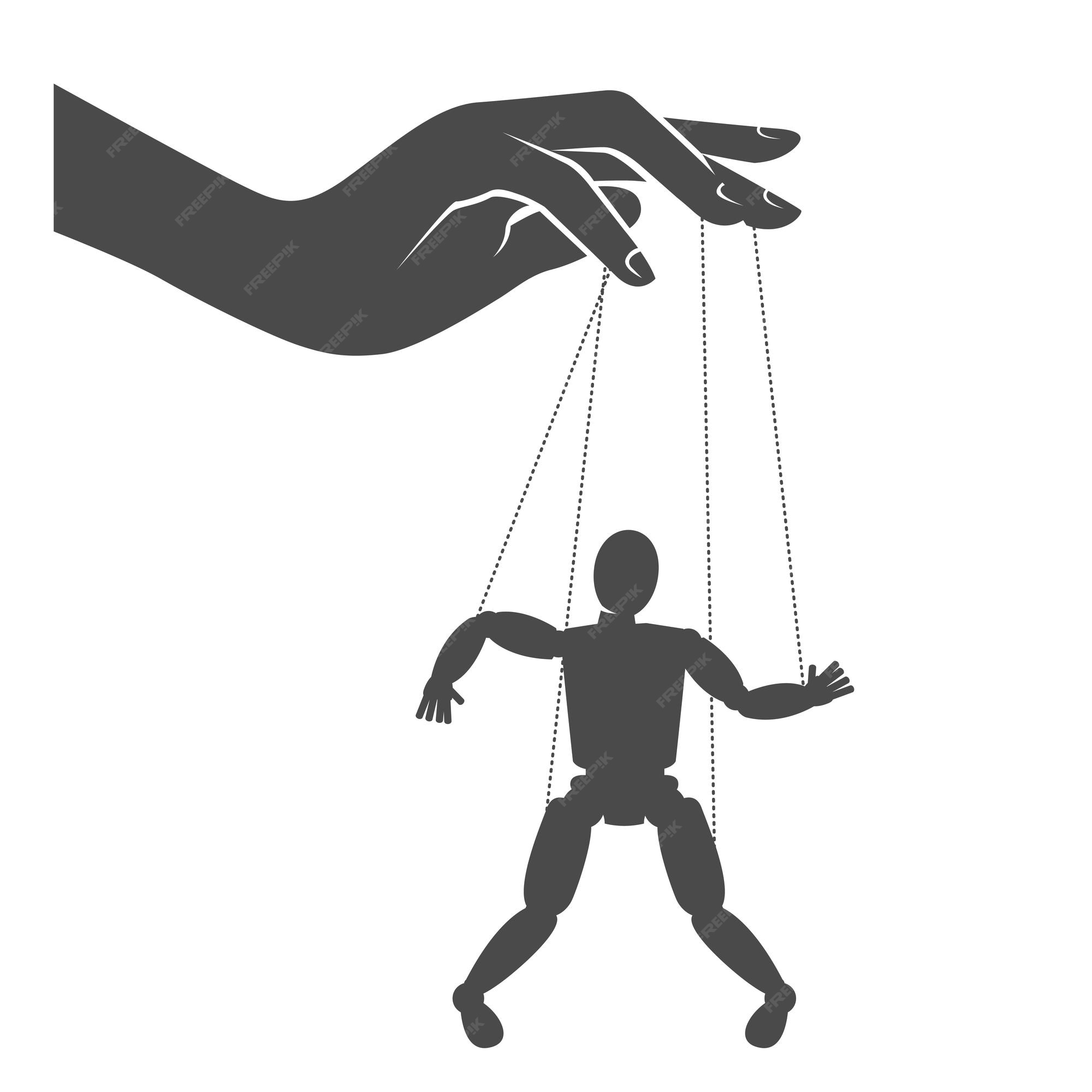
Column 4.5 — What The Other Person Should Have Done
Reading this extra column often brings laughter or tears, depending on how much of our ego or genuine heart is invested in our expectations. “They should have seen how awesome I am and hired / fallen in love with / chosen me!” We can laugh about these. But what about “They should have honored our relationship.” In this type of Should Have, we’re often led to an unexpected “Dishonest” notation in the standard 4th Column.
Often, we sensed somewhere in our core that this person lacked the integrity, emotional maturity, or wisdom to do the right thing, and yet we masked our intuition with unrealistic hope. We tried to will them to be who we WISHED they were — but weren’t. And how can we be angry with someone for simply not having qualities that, deep down, they too wish they had? These people just plain aren’t there yet. Maybe they never will be (sick man prayer time). So instead of lasting resentments, they become…
Teachers!
When we experience first-hand the pain inflicted by another’s lack of integrity, emotional maturity, or wisdom, we understand why these qualities are so essential to living an honorable life. We gain a better sense of who we do NOT want to be, and thus a better sense of how to live.
A good sponsor will work with this material in hearing your 5th step, and help you see the truth about yourself — that you are a loving, vulnerable, often frightened child of god who has been unwittingly either sticking their foot into power lawnmowers or letting their foot rest in the wrong people’s lawnmower path, even though you’ve seen they won’t swerve. We learn how to move our feet away from what hurts us and stand tall with our face raised to the sunlight of the spirit.
As for how we hurt others — that’s the grist for Steps 8 & 9.
.

Filed under AA, Alcoholism, Big Book notes, Recovery, Twelve Steps
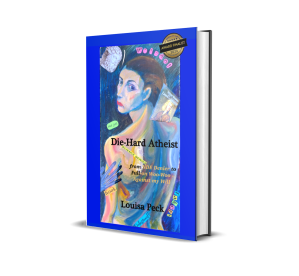
What follows is an excerpt from my Near-Death Experience (NDE) memoir, Die-Hard Atheist: from NDE-Denier to Full-on Woo-Woo. The year is 1994, twelve years after my NDE, which I’ve long since dismissed as nothing but a hallucination. I’m 34 and living as a reckless pseudo-nihilist.
.
This one particular night begins like countless others. I go to a kegger near downtown Olympia, a ton of young people, loud music. The cool boy was there, I’m told, but he left. Shit! He might come back, though, so I drink.
I fall down multiple times. There’s a goddamn step somewhere in the middle of the basement, where the keg’s at, that keeps tripping me. Each time I’m going down, I hear that chorused “Whoa!” from everybody nearby – as if it matters whether one’s body is vertical or horizontal. People make such a big deal.
Now it’s late. My friends Megan and what’s-their-name get in my car and drive me to a house one or two blocks up the street, where they put me in someone’s bedroom. I’m supposed to sleep there on some stranger’s bed. Driving’s what I’m not supposed to do – they’ve taken my keys. No, no, no driving, Louisa! You’re so shitfaced you can’t even walk! But as soon as they leave, I decide, fuck this. I get up and stagger my way to the stranger’s kitchen, where they’ve foolishly left my keys right there on the table.
Ha! Tell me what to do! 
In the car, I’m able to figure out which key is the one but not able to find the thing. I stab again and again at the steering wheel shaft, but the goddam ignition is nowhere. It’s AWOL. I feel with my fingertips for about ten hours because it’s too dark to see and my eyes won’t focus anyway. Finally I get it and the engine starts. Yes! I’m such a rebel! No pleasure but meanness – I just don’t friggin’ care. I might die. That’s fine. I’m so fucking tired of everything.
I’m speeding down the two-lane highway that winds into Thurston County, 80 mph in a 50-mph zone. Smack into a tree – that would be best. First prize is a Get-Out-of-Everything-Free card, and second prize I end up just crippled with brain damage. Finally no one will expect me to do stuff or be likable. “Such a shame,” they’ll say, “she had potential” – but at least they won’t expect me to function. My parents – well, they have three other kids, right?
What’s this? Here come reflectors for a skinny bridge over some railroad tracks. I see the diagonal black and white stripes, but they’re tripled or so, so they blur across the whole goddam road. I just kind of shoot for the middle, sort of like bowling.
Whoosh! It’s behind me!
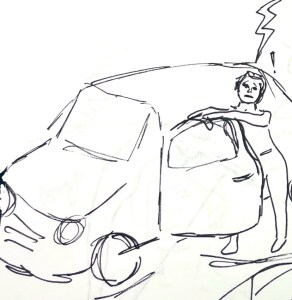
A few minutes later, I roll into my driveway and marvel at my drunk driving skills, how I’ve made it home alive. The night is clear, the sky starry. I slop out of the car and, hanging onto the open door, look up, thinking: “Damn, I’m a bad-ass!”
But something hits me, hits my brain, my mental arena. ZAP!!! It’s like a voltage shot into my consciousness, a bolt of intention powerful enough to blitz everything else from my head:
This is the last time I can help you! And you DO know right from wrong!
The blast of this knowing – out of nowhere – astounds me. It’s like getting struck by lightning, but the lightning is thought. It seemed like it came from that starry sky, so admonishing it’s as if somebody meant to physically slap my face: Wake up!
I feel shaken, bowled over, my billowing ego punctured.
I wonder in a sliver of thought: Is that God? Is it you who were with me in the light?
The next morning, I find the kitchen a mess and can’t say how it got like that. A carton of milk – mine, not my roommate’s – is sitting out warm on the counter. Oatmeal’s dribbled on the stove and half eaten from a saucepan. All this I must’ve done in a black out. Yet so clearly, so vividly, I remember that moment of whizzing between the bridge reflectors! So perfectly, I remember getting shocked by that thought bolt, that pronouncement, that powerful knowing I did not make.
What the hell was that? Who was that? How could that happen?
In the weeks following, I can’t get drunk enough to stop wondering. You DO know right from wrong! It comes back while I’m drinking, when I’m hungover, if I’m trying to impress people I know are shady. And trailing after the memory is a weird, implacable sense that, yes, someone has been helping me, saving my life time after time. And now they’re sick of my stupid, dangerous games. Go ahead and die: they pretty much straight up told me so.
For me to hit rock bottom takes about a month. I’ve lost all fight, all rebelliousness.
I’ve sunk.
…………I give up.
…………………I just can’t.
On January 29, 1995, I resolve to take one of two possible actions. Either 1) buy a gallon of vodka and chug it down as fast as I can before I pass out and or 2) call the phone number a sober friend has scrawled on a scrap of paper when, as I exited her house, I mentioned being super hungover and conceded that I might possibly have just a tiny bit of a maybe slight potential drinking problem.
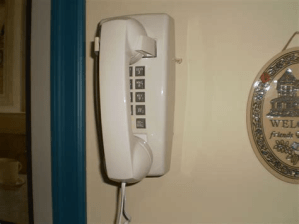 I know where the paper is, next to the wall phone. The allure of suicide gleams brighter, though, that absolute freedom of throwing in the towel. You’ve been rescuing and rebuilding a card house that keeps partially collapsing, and finally, instead of trying to prop it up yet again, you just flatten the fucker on purpose.
That’s my life. I’ve tried and tried. No one, I believe, really cares about me, in part because no one’s ever seen past that “like me!” tap dance I trot out to please every goddam asshole. I hate that fuckin’ dance. I hate being me.
But I guess I have to call AA first, in part because, out here in Olympia in 1995, you can’t really buy a gallon of vodka on a Sunday. Liquor stores are closed. So, fuck it. I’ll call the AA number first and figure out the gallon thing second.
I call.
So much kindness from the woman who answers floods me with feeling. She tells me a meeting time and place, yes, but it’s her sweet voice, her grandma way of assuring me that, as I insist, this meeting will be far enough from town that nobody will know me. She calls me “honey,” tells me “don’t you worry!” I want to weep so badly, so gut-wrenchingly, but my eyes are broken.
At that first AA meeting of my own, I feel contempt for everyone as I’m clearly much too cool to be here. And yet… there’s something in the room, some energy I can’t put my finger on. It feels good and warm and safe, a lot like that grandma’s voice.
….and I’ve not had a drink since.

Filed under Alcoholism, Drinking, Hitting Bottom, NDE, Near Death Experience, Spirituality
Going to AA meetings and working the 12 steps with a sponsor can transform our lives. But in my experience, having taken the 3rd step involves conceding the fallacies of my own “reflex” thoughts on a daily basis. My mind is still set to certain defaults established in childhood or whenever, and those patterns are frequently, though not always, the first inclinations that come to mind.
Yeah, yeah, as I come up on 30 years’ sobriety (on 1/29), the 11th Step promises have mostly come true. That is, “we find that our thinking will, as time passes, be more and more on the plane of inspiration. We come to rely upon it.” But keep in mind that such reliance is possible only because we’ve made a habit of “ask[ing] God for inspiration, an intuitive thought or decision” (86-7).
In Step 3, I acknowledged that my own brain, when detached from god, is busted. Let’s remember where my own best thinking and determination to seek happiness and thrive on my own terms led me again and again: incomprehensible demoralization, deep despair, and suicidal ideation. Drinking was only one of many great ideas my thinking espoused for how to best navigate life. And it’s STILL busted, my brain. What I’ve “come to rely upon” is guidance from a higher power, not my ego-tainted perspective.
So here I am on my beautiful 5 acres in rural Oregon. Everything my angel foretold has come to pass. Somehow, my city house sold in three weeks – for less than I’d wanted, but within 24 hours of the deadline set in my contingency offer. Naïve about closing costs, I found myself many thousands short of the new house price, but my mother’s estate, which had been hung up in probate for over a year, came through 6 hours before I’d have lost the new house. These are little miracles. In other words, I’m pretty sure I’m where I’m supposed to be, but by none of my own doing — other than moving ahead in faith.
Those of you who’ve moved after age 50 know this shock of not knowing where you are. My mental map of Seattle was incredibly detailed; here, I knew the way from my home to the store, beach, and a few trails.
But that’s where Step 3 comes in. For vague reasons, I felt hesitant to show up at any new AA meetings. I would look them up online, even put them on my calendar with great resolve, but once it got pitch dark out – and I do mean pitch dark – I’d be scared to leave my cozy little house. So I didn’t go to meetings for a month. Not even Zoom ones.




ISOLATING. That’s what I was doing, with my 2 cute dogs, a fireplace, deer outside the window, and coyotes and raccoons I’d sent packing, while I threw myself into UN-packing, putting off AA always just one more week. By grace, I knew this was my alcoholic brain’s will for me, not god’s direction for growth. Meanwhile, my addiction was rubbing its evil hands together in anticipation of a relapse.
So I did what I could: I called a friend from my old home group and confessed all the above. She made me promise I’d go to an AA meeting the next day, so I promised. Then I broke that promise… because yada, yada. But after she texted me, DID YOU GO?? and I had to sheepishly reply NO, my ego, I suppose, got prodded from the other side. I’m supposed to be all wise and shit, but here I was acting like a backassward chickenshit. So the next week, I set out in utter darkness and sheets of rain, relying solely on my high-beams and GPS to get me somewhere. Eight miles later, I walked into a cozy room with a fireplace, Christmas tree, and cushy chairs filled by six fellow alcoholics.
I was home. I was safe. And before I even spoke a word, I was loved.
I thought, “Of course! Of course! How could I have been so timid, so stupid, so gullible as to isolate for over a month?!” But I also knew: fear had taken me offline. Fear had slid me backward into my own reflexes. Louisa’s broken brain had been telling me that staying home alone was playing it safe. It was wrong — as always.
Well, those alcoholics had me download an AA app very that night and recommended three more meetings nearby. I started going, meeting more alcoholics, making new friends, being of service, even going out for coffee! My routine now is three AA and one Al-Anon meeting per week, all in person. For my 30th sobriety birthday, a woman I’d never laid eyes on in November is bringing a homemade carrot cake for the celebration, and everyone’s excited for me.
What’s more, these people possess a mosaic of experiences that mirror everything I’m struggling through. They remember being new here, wanting to isolate, feeling baffled by power outages, wells, and septic systems, and many feel shocked to find themselves at various thresholds of old age. Not only have they told me about gym facilities, parks, trails, garden clubs, community email, and less expensive stores, but at every meeting I hear profound insights that allay my fears and enrich my experience of living.

Pick one. |
 |
Whenever I don’t WANT a new sponsee, don’t WANT to drive someone to a meeting, or chair one, or stay after to break down the room, etc., god’s inspiration reminds me how I didn’t WANT to go to AA in the first place, didn’t WANT to get a sponsor, REALLY didn’t WANT to throughly work steps 4 through 9, or to change “everything” about my approach to living. But going against my own thinking has brought me a joyous life I could never have built myself. Day by day, I can either screw it all up by trusting my defaults, or reach beyond them to continue on this amazing spiritual path toward new adventures.

PS: Just for fun… Deer and coyote from inside my house.
Filed under AA, AA fellowship, Alcoholic relapse, Alcoholics Anonymous, Happiness, Meetings, Recovery, Step 3
Exactly what factors bring on alcoholism remains unknown, although genetics, trauma, and alcoholic role models often play a role. At some point in our early years, many of us were dealt more pain than we knew how to process, so when we discovered a “Get Out of Pain Free” card – aka alcohol and drugs – we rolled with it. We drank or drugged away difficult feelings, muting them, taking the edge off. But over time, this card not only quit working; it morphed into a get out of happiness, dignity, human connection, and desire to live card.
That’s when we faced the two exclusive alternatives: “One was to go on to the bitter end, blotting out the consciousness of our intolerable situation as best we could; and the other, to accept spiritual help” (p.25)
Coming up on 30 years sober, I’ve found that I eventually reach this same T in the road with every difficulty, except that now I find other ways to “blot out” what’s actually going on for me. Used to be infatuation, sex, self-pity, and jealousy topped the list. Today it’s anxiety, anger, and many forms of pointless distraction like online shopping, posting stuff, scrolling, etc.
Whatever. You get the idea. I stack secondary preoccupations and emotions on top of unwanted feelings about whatever bump in life has come up.
Exhibit A is my life these days. Call me woo-woo, but I have an angel who gives me guidance.

Angel story’s in my book
About two years ago, he directed me that once my mom died and my son moved out, I should sell my home of 25 years and buy land in a place where I could create an animal sanctuary and retreat site for alcoholic addicts. Mom died. My son will move in with his girlfriend after graduation. So I said, Okay, I’ll do this thing, however difficult.
As I write, I’m in the first stages, having rushed to get my house listed in time to meet the terms of my offer on 5 acres in rural Oregon. I’m between homes, living with my two dogs in an idyllic rustic cabin with a beautiful view of Puget Sound and distant mountains, surrounded nature. I got Starlink and built a foundation for it on the roof, though the trees around me mean it quits every 10 minutes for about 10 seconds, so I have to teach from outside the local store. No laundry or drinking water, extension cords everywhere, and I bathe in rust-water from the 15-foot well. But I’m set. I’m doing it. Hopefully, the next pieces will fall into place.


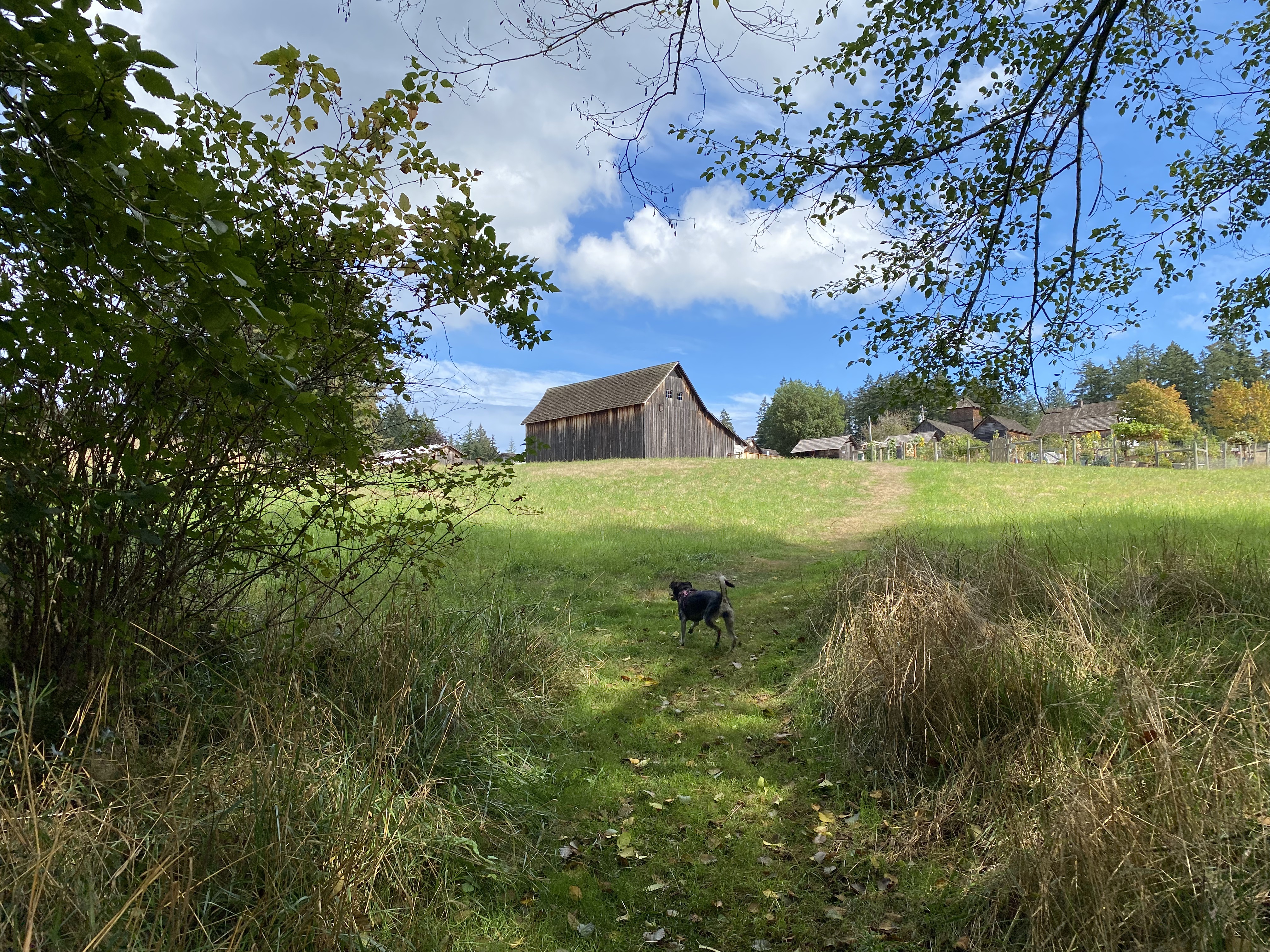

So what have my primary feelings been? Accomplishment? Excitement? Savoring all this beauty and simplicity? No. Try anxiety, constant fretting about the dogs, financial insecurity, criticism of my listed house, doubts about the new place, and just a general, pervasive sense that I’m doing it wrong.
Anxiety reached such a peak that I can’t leave the dogs in the cabin, even if I turn off the gas and unplug everything, because I’m STILL TORTURED with worry that the cabin will burn down while I teach, attend an AA meeting, or visit the post office. I also eat enough sugar-free cookies to hurt my stomach. With no one to talk to, I waste hours online and get riled up about the news.


But as I’ve continued to pray for relief from these unwanted feelings, something’s slowly shifted. I was scraping moss chunks off the roof the other day when I suddenly felt tears rising. Out of nowhere, a sob wanted to come up my throat. So I let them through. I set aside my tools, turned off my podcast, sat down on the shingles and ugly-cried – at first not even sure why.
But then it came: My home! My mom! Raising my little boy! My ex lost to alcoholism! My youth and its expansive, limitless future of dreams. All are passing from my life, and I loved them, I miss them. I don’t know anything – who I’m going to be, what my life will look like. Yet I need to grieve the life I’m leaving. My angel told me, You have a chapter left, so let’s use it for good. But who wants a goddam coda, however meaningful?
For me, the gift of sobriety is learning to recognize that it’s not about the cabin burning or Netanyahu kindling world war. It’s never about the big tizzy, whatever form that tizzy may take. When illusions fall away, it’s about facing the vulnerability that 99.9% of what happens is outside my control. It’s about knowing my fate is always in god’s hands more than my own, and trusting that god’s goodness makes up the foundation of what happens despite my human ignorance of the why’s and how’s. Faith and courage — these are all I EVER have to draw on. Ever, ever, ever.

I remember the predawn hours after the first night I’d spent sober, when I felt so terrified of living with or without booze that I dropped to my knees by the glass doors and begged god for a sign. Across the near-dark patch of grey sky in front of me flew a lone bird, silently navigating from hither to yon with almost no light. I realized then that nothing thrives without faith in something, whether conscious or unconscious of that faith. My faith had lain in booze and ego, both of which had failed me. Now it was time to hand it over to god — the same god guiding that bird.
That was 1995, and it’s still true for me today. Over and over I wander from humility, forgetting, thinking this life is my show, but eventually I’m led back to that touchstone, and that has made all the difference.
Filed under Alcoholism, Faith, fear, living sober, Recovery, Sobriety
Recently a visitor to my AA homegoup shared that at 19 years sober, he’d joined coworkers at a business conference and, since cocktails were free and everyone at his table was ordering, decided to have just one. Six long years later, after losing his job, destroying his marriage, impairing his health, and
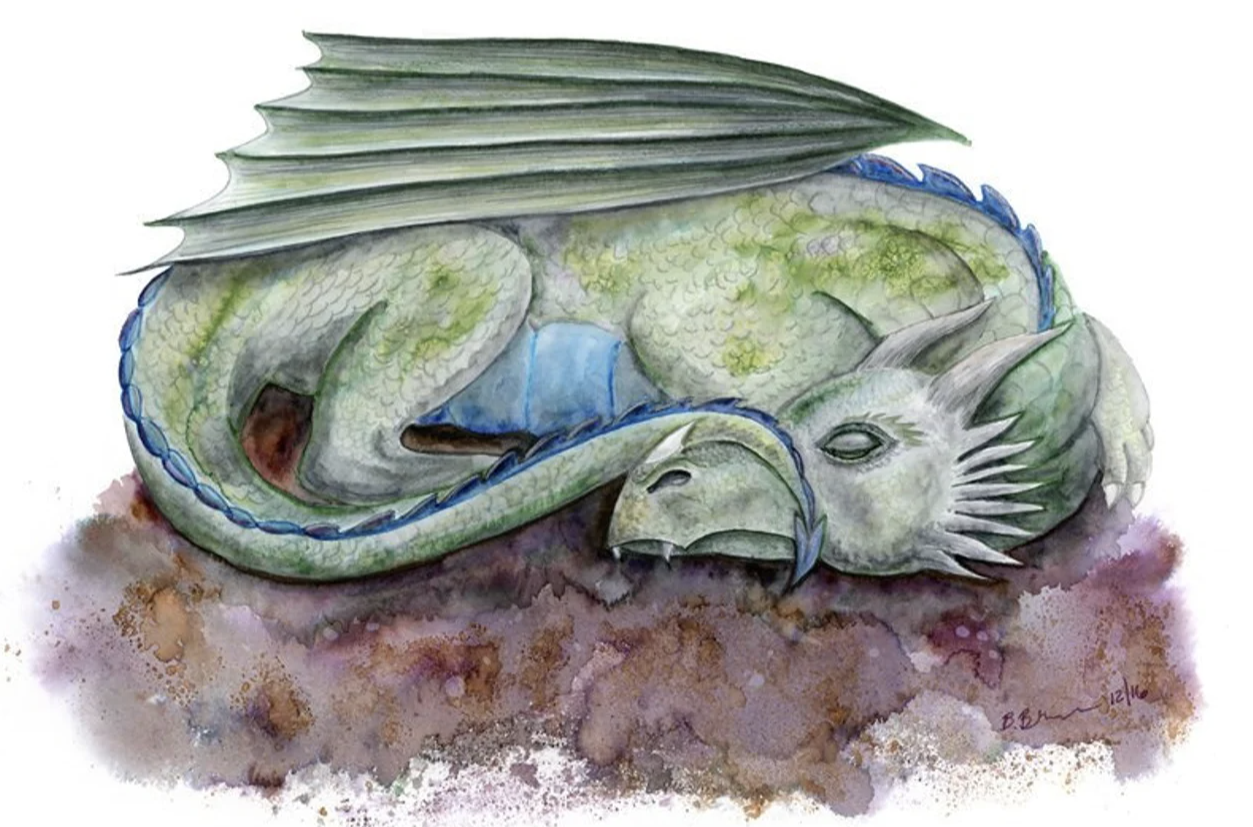
Alcoholism only sleeps; 1 drink awakens it
having scrabbled at the brink of sobriety in baffled despair as he fell back again and again into drunkenness, he somehow made it back. Sober again four years as he spoke to us, he’d gained a profound respect for the insanity of alcoholism.
Why does this happen? How can we avoid it?
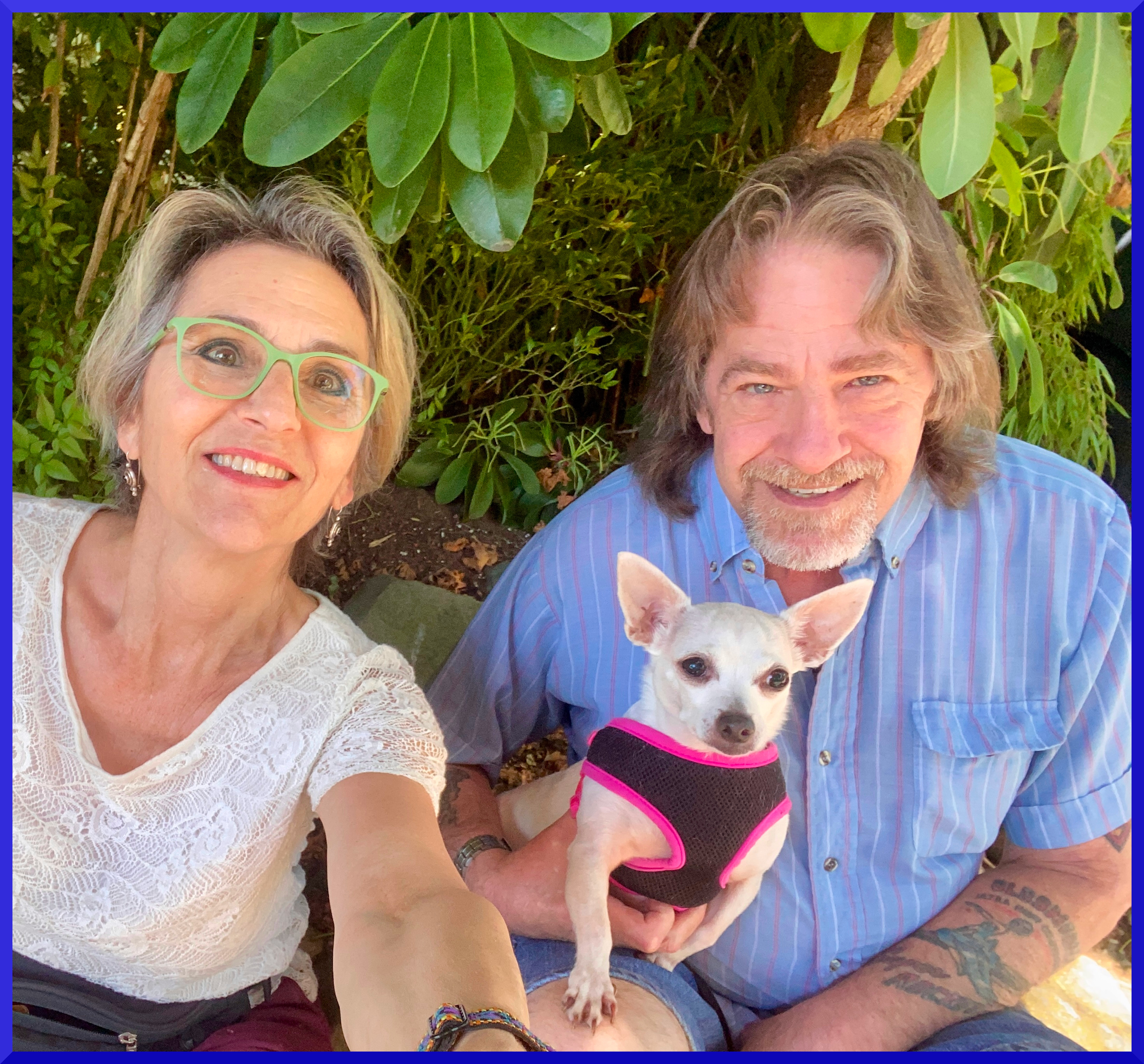
I myself have never relapsed since my first AA meeting on January 29, 1995, so I cannot speak directly to the inner experience of deciding to drink. Instead, I asked a friend in my homegroup who knows the cycle well to offer you guys some insights. Here is Clark’s story. He left out the trauma of his childhood with a Vietnam vet step-father, but trust me, there was plenty.
“I got my second DUI in back 1982 when I was 19, but I really didn’t want to be sober. I was court ordered to go to AA, so I gave it a half-hearted try, but I wasn’t willing to follow directions. Both my mom and sister were in the program, but I’m incredibly stubborn. I thought, ‘AA is for weak people.’

“By my late 20s, I was making great money. I had a wife and kids, a lakefront home, a speedboat, a Harley, all sorts of toys — and all of it felt meaningless. I was miserable and wanted to kill myself. Booze had quit working. My cousin and best friend were doing heroin, though, so I thought, I’ll try that! In a way, it saved my life; heroin kept me from killing myself; but it also took my addictions to a new level.
“I’ve never officially counted how many times I’ve relapsed, but I’d guess about 20. Every time I was in pain or something bad happened, I’d run back to AA because deep down I knew that was the solution. But again, I wouldn’t follow directions. In 1986 I found crack cocaine, and it completely destroyed my life. I checked myself into treatment and stayed sober about 3 months, but my wife gave me a hard time about being away from home for meetings.
“The main recurring theme of my relapses has been that I forget. I forget how bad things got, and I remember the good times — ’cause there were good times. In 1990, I’d left my wife, stayed up all night smoking crack with a girl I knew from high school, and to get money for more crack we decided to rob a gas station. After I eventually got caught, I went back to AA to avoid jail time. That time, I stayed sober about 6 months, and it was some of my best sobriety up to that point. I actually got a sponsor and cracked open the [Big] Book. But then I met a girl in AA, we were both new, and we got drunk.
“In 1997, I started selling crack myself, but pretty soon I became my own best customer, and before long I ended up in prison. I got clean with my second wife, until she died at 26 giving birth to our daughter. After that, I didn’t even try to get sober for years. I just had too much pain.
“Still, the cycle kept repeating. One thing about relapse, with me anyway: it starts days before I actually take a drink or drug. My thinking gets bad, I’m frustrated about something, in some kind of pain. I wasn’t good at reaching out to people, so I’d convince myself that THIS TIME, things were going to be different! I’d manage it. I’d control it. I’d keep it to weekends.
“This last time, I had a cocaine-induced heart attack, went to the ER, got shocked back to life 6 times, and stayed in a coma for 2 weeks. My poor sister, who is not religious at all, went to the [low-bottom AA hall] and asked them to pray for me. I came out of the coma, but within 2 weeks I was back to drinking and smoking crack. Right about then I got a pretty sizable inheritance, so I proceeded to smoke it — about $500 worth every day. I wanted another heart attack. Dying, I’d not gone to the light, but to a darkness completely painless, and I wanted that again.
“I’d wake up mornings feeling I absolutely could not stand another day. The book talks about ‘the jumping off point’ when we can’t imagine life with or without alcohol. I saw a choice between getting sober and dying, and I chose dying — because I didn’t think I could get sober. I’d tried so many times and failed. I never left my place except to meet the drug dealer in the driveway or to get cash at 7-11. I wasn’t showering; I wasn’t eating. I was a wreck, utterly isolated and alone.
“But… my sister kept coming over. She has 38 years, and we’d always been close. She had me write a will; she made me write a letter to each of my children to explain why I was dying. I could see the pain in her eyes. And I decided, for her sake, I’d give this thing one more try.
“Thank god, two or three days later, it dawned on me that I’d never given AA a fair shot. There’s that line in ‘How it Works’: Those who do not recover are people who cannot or will not completely give themselves to this simple program… That was me. Every time, I’d do a little bit of this and a little bit of that, I’d grudgingly drag myself to 2 or 3 meetings a week, but I’d never given it the whole deal. And this time, I decided to give it the whole deal. And it’s been the difference of night and day.
“I went to 2 or 3 meetings a day for 16 months. After about 90 days, my brain began to clear, and I decided I was going to pray, I was going to get sponsor, and I was going to work the 12 steps out of the book with him. And I did all those things. I’ve prayed every day since. I can’t point to one of those three things because I think they’re all integral, but my life has changed because of that decision. I’m so grateful for what I have today that I keep doing those three things. People I’d known in AA for over 40 years, they always welcomed me back. Given a choice, I wouldn’t pick me as a friend because I was so slippery. But they were always there for me.

“Today at 2 years and one month sober, my life is completely different. I just got back from an AA Roundup in Port Angeles, and I loved it! I went to meetings, fellowshipped with friends, went out to dinner, walked on the beach. It’s a blast. I’m still kind of shy about making new friends, but I feel I belong.
“I never had a higher power before, but praying and really listening in meetings to how other people were approaching the higher power thing, that opened the door. I have some decidedly un-Christian views (pro-choice, pro-gay rights, etc.) but I’ve found a liberal church where I’m welcome and we don’t talk about those things. Prayer centers me.
“If someone wants to get well, I would say, ‘Give yourself to AA completely. Do the work laid out in the 12 steps.’ Not in your first week! But you can’t keep putting it off, either — working the steps with a good sponsor to the best of your ability.
“My happiness and equanimity are at a level I’ve never had in my life. Ever! I have so much gratitude. Finally being done, having a life that is manageable, friends who care about me, being able to look at myself in the mirror, not feeling like a piece of shit, sleeping good every night. I have a life today that I never could have imagined. I still go to a meeting every day, sometimes two. I walk my little dog — she loves me. I’ve steered away from relationships so far, but I figure when I’m ready, God will give me one.
“Every day is an amazing journey.” ❤
Filed under AA, Addiction, Alcoholic relapse, Alcoholics Anonymous, Alcoholism, Drug relapse, Recovery
The first three steps of Alcoholics Anonymous are pure logic:
Therefore
In Step 2 alone there’s plenty to ruffle our prideful alcoholic feathers, right? Not just the higher power thing, but this insinuation that we’re currently not sane. Hmmph! For years, maybe decades, we’ve defended our passionate reliance on alcohol by assuring everyone, including ourselves, “I’ve got this!” I can remember thinking, “And even if I don’t quite have it, I’m saner than most people.”
Of course I had no clue how insane I was: I wasn’t SANE enough to! Today, however, I can affirm with perfect certainty that I was bat-shit crazy and had been for years. Confusing self-poisoning with self-care on a daily basis was only the tip of the iceberg.
But then there’s that whole “God” thing. Many newcomers choke on the word, so they never really nail down this crucial foundation of Steps 1-3. Religion’s claimed monopoly on spiritual life is largely to blame. It has bamboozled so many into thinking a higher power must involve religion.
 Quite the opposite, in my opinion. As Carl Jung observed, “One of the main functions of organized religion is to protect people against a direct experience of God” (emphasis mine). Religion miscasts god/HP as an external authority figure, when in fact god is “living” us 24-7, living the trees and grass and little rolly-poly bugs and bunny wabbits. God loves us all sooooo powerfully that we’re animated by it. That wondrously complex arrangement of hydrogen, oxygen, carbon, and trace elements you see in a cold corpse is inexplicably enervated with god’s love to become… YOU!
God speaks within us, not through any text or religious authority. Disagree if you want, but I guarantee you, no religious authority can keep an alcoholic sober! Only we, waking up to god’s guidance through Step 3, can manage that one day at a time. In fact, the more religion has been forced on someone as a child, the more difficult finding god within can be.

God at work!
My ex-boyfriend recently drank himself to death with beer — Indian Pale Ale, to be exact. He’d gone through detox and treatment to emerge gung-ho sober, but multiple handicaps blocked him from tapping into a power greater than himself. A) He’d been raised Catholic; B) he was left-brained to an extreme, having impaired his brain interconnections with binge drinking as a teen; C) he felt extremely awkward and uncomfortable in socializing, also due to B.
A made him keep reverting to seeing HP as an authority figure; B kept him from feeling his connection (8:00) to everything else, and C kept him from hearing or seeing god through his fellow alcoholics.
Below are his last texts to me. Before you laugh at the ‘Subaru’ thing, recall that while sober this man could carry in his mind the full schematics for a Boeing 787. These texts are crippled with drunkenness because… he was less than a week from dying.

You can imagine how often I weep that I didn’t agree to that last call, as I might’ve if I’d not been sitting right next to my Al-Anon sponsor. But in truth, I didn’t want to witness him in that state, slurring his words, awash in vague emotions, making little sense. It was too painful. Besides, I couldn’t have helped him find his HP any more than you could. A week later, on his 60th birthday, he died of a gastric hemorrhage.
“Do the next right thing” was one of those resonant 3rd Step sayings  I heard early on in AA. Strangely, “right” did not equate to “most desired.” It steered me away from what I thought would feel good, make me look good, or bring temporary relief, and toward a deeper sense of right and wrong. **
We all carry that sense within. It’s a feeling in our gut. We often have to quiet the chatter of our thoughts before we can make contact with it, but it’s there. Initially, I grasped only few “next right things” like so many flimsy reeds: go to a meeting; stay out of bars; don’t meander toward the store’s booze section or hang out with users.
Today, though, I have a huge, rich bouquet of next right things to choose from every day: practice gratitude; call a friend (instead of texting); exercise/ hike/ do yoga/ walk the doggies someplace new; do service work or donate; tidy or fix something; meditate; notice beauty; be kind, be kind, be kind.
 On my favorite sleep podcast, in a book entitled, The Princess and the Goblin, I recently listened to a description of how a child princess, who has discovered her own magical great, great grandmother in a remote tower of the castle, is led by the grandmother’s wisdom even in her absence. When afraid, she’s supposed to put a ring the grandmother gave her under her pillow and feel with her index finger for a gossamer thin thread connecting the two of them. It’s a perfect metaphor for always being connected to our higher power.
But here’s the cool part. The thread at her fingertip doesn’t just lead to the safety of her grandmother. It leads her deep into the goblin mines, into terrifying pitch darkness, across underground streams and through narrow passageways where she’s filled with doubt and urgent desire to turn back but can’t because the thread leads only forward. To her amazement, it leads her to her friend, a courageous boy the goblins have all but buried in a cavern, shows her the way to free him, and guides them both back to daylight and safety. In fear for herself, she’s led to rescue someone else. While boy insists her idea of “grandmother’s thread” is nonsense (right up til the end when he finds it himself), she trusts it beyond her own thinking.
So, I find, goes life after one makes a solid 3rd Step. We are led forward, often scared, but guided to greater outcomes.
I alone can sense where my “god-consciousness” leads. Many don’t understand why I’m about to move away from this city where I was born 63 years ago — to I don’t even know where. I’ll find out soon enough. I trust my thread. It’s just the next right thing.
.
.
.
Filed under AA, Alcoholism, living sober, Recovery, Step 3
Hi alcoholics and addicts!
AA’s Step 11 reads, “Sought through prayer and meditation to improve our conscious contact with God,” but many newly sober alcoholics – and people with time – have trouble knowing where to start. I was moved after my morning meditation to record a spontaneous YouTube meditation for this blog, so I did. Such reflections free me from my fears and self-criticisms (see bedevilments, p. 52, Big Book).
Close your eyes and hang out.
This is a shareable (but unlisted) link. Feel free to share it with anyone you think might benefit or post it on recovery pages. Please let me know in the comments if you’d like me to make more.
No hair combing, zero make-up, not trying to look presentable. House jammies and bedhead and reflecting glasses. The focus is inward toward source and outward toward you.
Here’s my sweet Alice a month after being rescued from starvation in the Rio Grande Desert. Her stunted body did catch up with her head and paws a little once she got regular nutrition, and she is often happy.

Filed under AA, AA talk, Adult Children of Alcoholics, Alcoholics Anonymous, Alcoholism, living sober, prayer, Recovery, Sobriety, Trauma
For so much of my youth, through so much of my active alcoholism, I believed I was supposed to do and be certain ways to be cool. I saw signals everywhere meant to teach me what was expected of me from the sector of society I wanted to emulate.
These signals took on a life of their own in my psyche. They became my own measures of success, and I knocked myself out trying to fulfill them.

My son and me
One of the biggest gifts of having been sober a few decades is freedom from all those supposed-to’s. I can choose the parts of life where I want to push myself, and the parts about which I don’t give a flying duck.
I don’t have to…
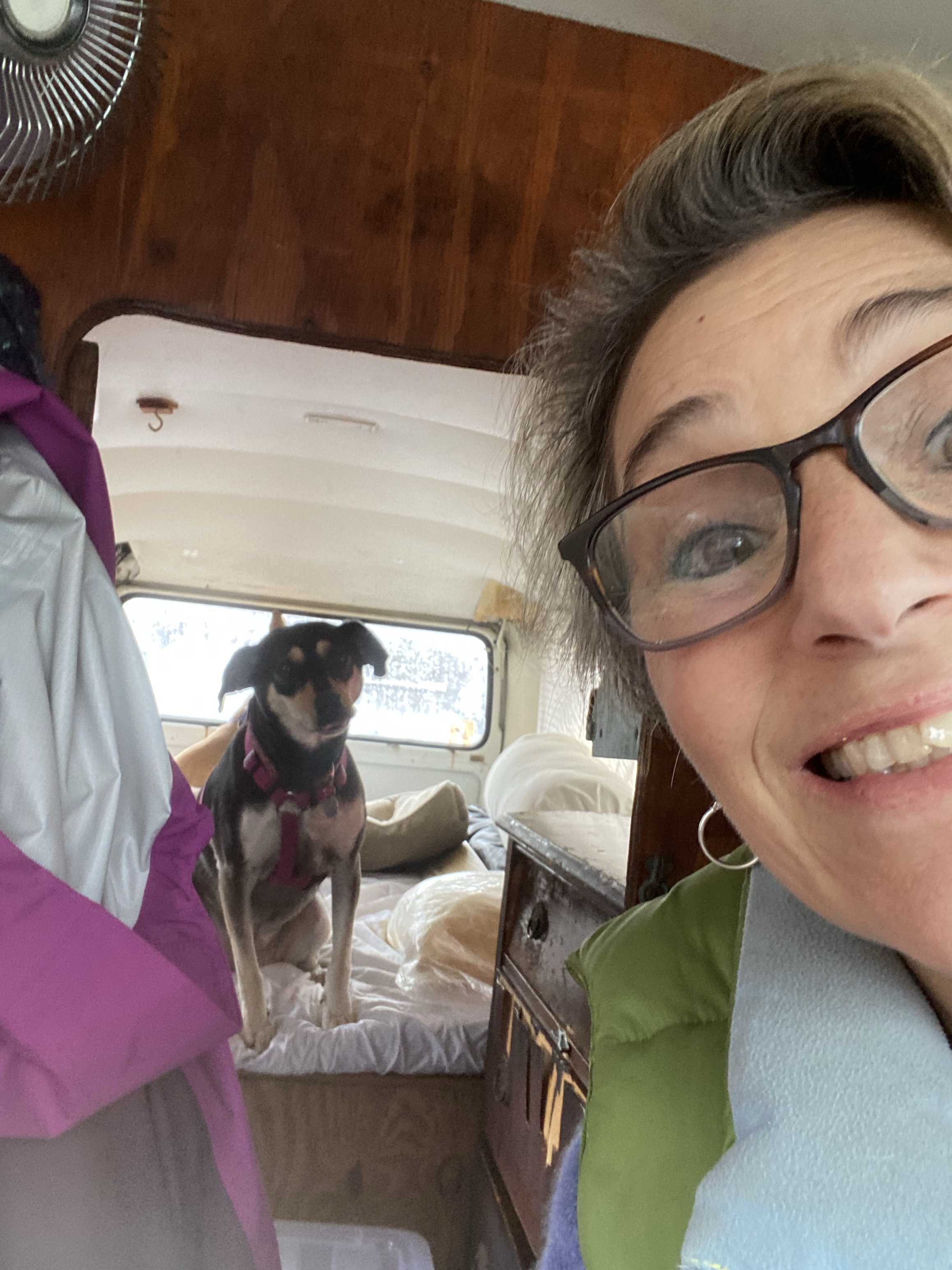
My 1975 VW bus
have little clue what they’re doing. Gear that’s been put to good use shows “cred” — short for credentials. My whole life shows cred, so I feel the same way about my household stuff, clothes, car, etc. It’s been around.

Filed under living sober, Recovery, Sober holidays, Sober passions, Twelve Steps
What are you feeling right now? Really feeling?
Can you look underneath that feeling and identify another? Can you take the time to let that underfeeling dilate and express itself? The degree to which you can do that might be an indicator of your emotional sobriety.
Long before we had the term “mindfulness,” the elders of early AA  talked about “emotional sobriety.” For a long time, I assumed emotional sobriety meant just not acting out. Active and newly sober alcoholics do such crazy stuff, fomenting drama like a dishwasher with the wrong kind of soap, spewing it onto all who come in contact with them. Bad relationships, bad communication, bad decisions, bad consequences, and back reactions to those consequences: we dig our trench of pain and isolation ever deeper.
Not indulging in that stuff, I used to think, was the key to emotional sobriety. Self-restraint.
Of course, I was wrong. When we tap the wisdom of the 12 Steps and god’s guidance, we actually outgrow these behaviors. How? By learning to notice WTF is going on, WTF we’re feeling, and WTF we’re telling ourselves that is not necessarily true.
A long-distance friend, 13 years sober, recently Marco-Poloed* me that she’d been asked to speak for an hour at a large AA venue — but had yet to commit.
“I don’t know that I can offer a positive message,” she said. “I still struggle with feelings; sometimes I can’t tell what’s real and what’s my feelings. I struggle with the scary kind of sadness; I get irritated by petty things; I feel resentments. I do have a lot more peace now than in the past and I do know what the solution is, but it’s not picture perfect.”
I promptly Poloed back, “Speak! Tell them exactly what you just told me! You don’t even THINK about all the trauma you’ve overcome because you’ve overcome it!”
The testimony to my friend’s emotional sobriety is twofold. One is that she knows she’s struggling, she can give names to her emotions and is always on the lookout for her part — i.e. 4th column / her side of the street. The other is the beautiful life she enjoys, helping people via her profession and working on deep trust in her marriage. “Picture perfect” is simply not compatible with being human.
The term “mindfulness” is associated mainly with Buddhism and meditation.  Meditation opens the space to notice the thoughts our brain is constantly churning out while we intend to detach from them. Every time we notice a thought has waltzed into the spotlight and seized the mic to start telling us what to pay attention to, we cut the amp and gently escort it offstage. This happens again and again. Gradually, we get to know the wizard behind the curtain, the monkeybrain constantly ushering these acts onstage. We learn its tricks and are not “hooked” by the thoughts, worries, and imperatives it generates.
Out in life, we can practice this same process. When we feel put on the spot, inadequate, awkward, angry, needy, infatuated or whatever, we can detach from the thoughts that drive these feelings. We can see which performer has nabbed the mic and unmask it as a feeling rather than objective truth.
This process is never seamless. It’s never easy, but the lifelong work of doing this stands at the core of sobriety. Feelings present a reality all their own: INTERNAL reality. When we can distinguish that INTERNAL reality from some form of objective EXTERNAL reality, we are practicing emotional sobriety.
To do so is a struggle for everyone, but especially for us as recovering addicts. For decades, usually during parts of life when our non-alcoholic peers were honing this skill of sorting what was on the table in any difficult situation, we did the opposite.
We swiped everything off the table with one simple move: choosing to numb.
When we choose to numb, to take the edge off, or to ride a destructive feeling, we choose NOT to seek WTF is actually going on. We choose self-centeredness, navel-gazing, and all the coping skills developed when we were kids navigating in dysfunctional families. “Let’s just run with this faulty tool again,” we say. That’s why many alcoholic addicts continue to behave like children well into old age.
I myself practice meditation only sporadically. I realized this morning, though, that I do practice a form of morning centering with daily consistency.
Two and a half years ago, I adopted Alice, a deeply traumatized puppy. She’d been abused by cruel owners who eventually dumped her and her littermates in the Rio Grande desert to starve, as most of them did. Every morning, Alice would awaken in terror of absolutely everything, including me. So I would spend a few minutes each morning holding her on my lap, giving her scritchies and kisses, murmuring and telepathically telling her she was loved. I would focus, focus, focus on this message:
“I love you, and I will keep you safe.”
Alice has indeed grown to love me and feel safe, to be strong and happy when not triggered.  However, she’ll never let me abandon what I now call her “medicine.” Each morning she sits directly in front of me while I fiddle with my phone or laptop, waiting permission to jump in my lap. I realized only this morning as I focused on our message that I was connecting with my higher power as well, that the love went both ways: god loves me as I love Alice.
The key is that each morning, she asks that I take the time to open my heart. Once it’s open, I feel what I’m actually feeling. Right now, that’s a lot of grief — for the loved ones I’ve recently lost. Tears come. Countless other feelings are in the mix, and I become aware of them. Without this practice, I would proceed with my day on autopilot, numbed by busyness.
To be awake takes practice, but it’s the key to a rich and genuine life.
.
Filed under meditation, mindfulness, Recovery, Spirituality


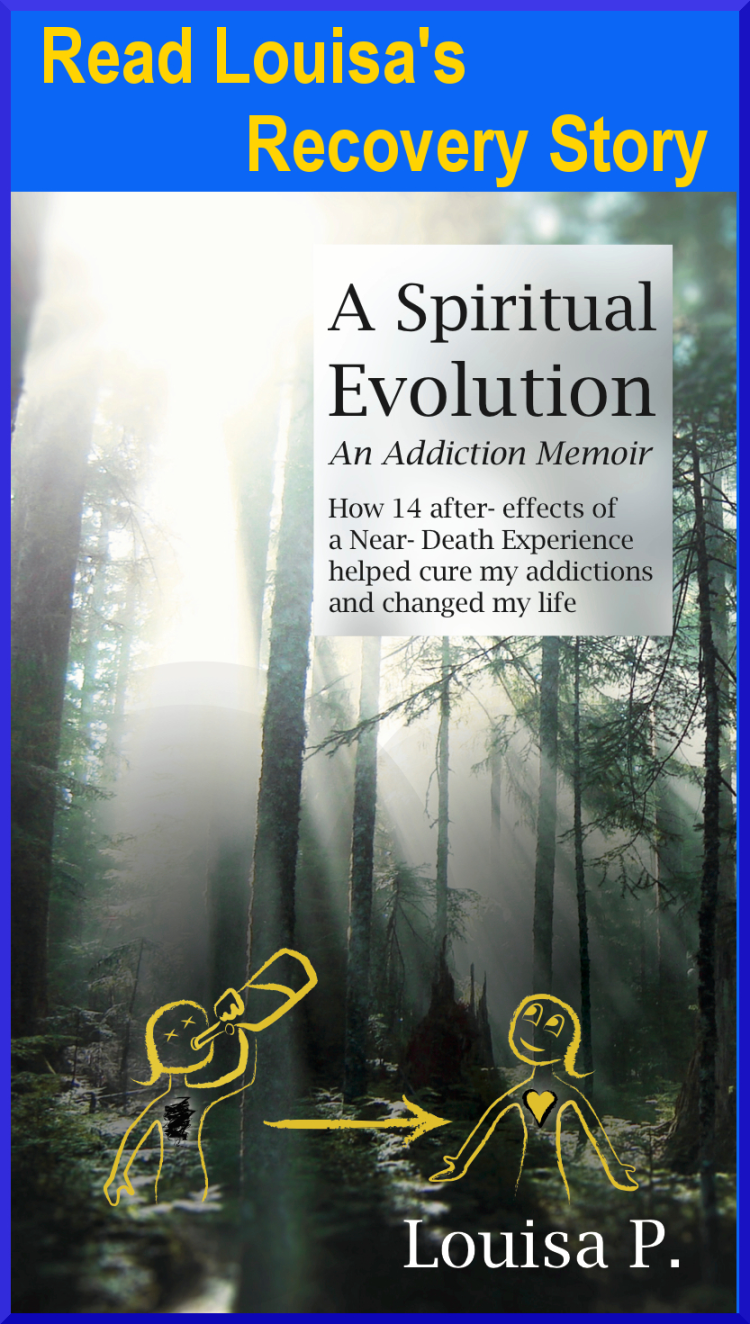
Kindle $4.95 - Paperback $13.95 - click here (It's lo-ong, sorta like a 10-hr speaker's mtg)
 A Spiritual Evolution